Your holiday: staying safe and well away from home
We hope you have a wonderful trip. A little planning before you go — vaccinations, medicines, sun cream and insurance — makes it far more likely you will come home with nothing but good memories.
Start planning at least 6 to 8 weeks before you fly
Some vaccinations need to be given weeks in advance, because your body takes time to build up protection. Some need more than one dose. Leaving it late can mean you travel without full protection.
Three things worth doing early:
- Check what is recommended for your destination on the TravelHealthPro website.
- Book any travel vaccinations you need with a pharmacy or travel clinic.
- Sort out travel insurance and a free UK Global Health Insurance Card (GHIC).
It is never too late to get advice. Even if you fly next week, a pharmacist can still help.
Call 999 straight away (or the local emergency number abroad) if someone
- is very hot, confused, drowsy or has stopped sweating — this can be heatstroke
- has been pulled from the water, or is struggling to breathe after being in water
- has severe chest pain, sudden breathlessness or collapses
- has signs of a severe allergic reaction, such as swelling of the lips or tongue, or difficulty breathing
- has a seizure (fit), or will not wake up
In most of Europe you can also dial 112. Find the emergency number for your country before you travel.
Your countdown to going away
Use this as a simple checklist. You will not need every step for every trip — a weekend in Spain is different from six weeks in West Africa.
-
8 weeks before
Find out what your destination needs
Health risks are different in different countries, and even in different parts of the same country. Check your destination on the TravelHealthPro country pages (opens the TravelHealthPro website). It is run by the National Travel Health Network and Centre and is kept up to date.
Also read the UK government foreign travel advice (opens the GOV.UK website) for safety and entry rules.
-
6 to 8 weeks before
Book your travel vaccinations
Ashcroft Surgery does not run a travel health service. Local pharmacies and travel clinics do. Book early — some courses take several weeks to complete.
-
4 weeks before
Sort out insurance and a GHIC
Buy travel insurance as soon as you book, and tell the insurer about any health conditions you have. Apply for your free UK Global Health Insurance Card. A GHIC is helpful, but it is not a replacement for insurance.
-
3 to 4 weeks before
Check you have enough medicine
Order your repeat prescription in good time. Take enough for the whole trip, plus a few extra days in case your journey home is delayed. See taking your medicines abroad below.
-
In the last week
Pack the health basics
Sun cream (at least factor 30), insect repellent, a small first aid kit, rehydration sachets, and your medicines in their original boxes in your hand luggage.
Travel vaccinations
Ashcroft Surgery does not provide travel vaccinations
We are sorry we cannot help with this one. Travel health is not part of the core NHS work our practice is funded to do, and giving safe travel advice needs specialist, constantly updated information about outbreaks and country rules.
Many local pharmacies and travel clinics offer this service, and they use systems that are updated with the latest information for each country. Please contact one of them directly.
If you are due a routine NHS vaccination anyway — for example a childhood vaccination you missed, or an MMR dose — that is different, and we can still help. Please contact us in the usual way.
Which travel vaccines are free and which are paid for?
A small number of travel vaccines are free on the NHS, because those illnesses would be a risk to everyone if they were brought back into the country. Most others are paid for privately.
| Usually free on the NHS | Usually paid for |
|---|---|
|
|
Free does not mean free everywhere. It means the NHS will fund them where a risk assessment shows you need them, at a practice or pharmacy that offers the service. As we do not run travel clinics, you will need to arrange these elsewhere.
Why do I have to pay for some of them? Vaccines that only protect the traveller, rather than the wider public, are not funded by the NHS. We know that feels frustrating when a holiday has already cost a lot. It is worth remembering that the cost of the vaccines is usually small compared with the cost of the trip — and much smaller than the cost of becoming seriously ill abroad.
Read NHS advice about travel vaccinations (opens the NHS website)
Taking your medicines abroad
Take enough with you
Order your repeat prescription in good time. Take enough for the trip and a few extra days, in case you are delayed coming home.
Keep them in the original box
Keep medicines in the packaging they were dispensed in, with the pharmacy label and the leaflet. Do not decant them into unlabelled pill boxes.
Pack them in hand luggage
That way you still have them if a suitcase goes missing. Take a copy of your repeat prescription list too.
Check the rules where you are going
Some medicines that are ordinary here are restricted or banned in other countries. Check with that country's embassy before you fly.
Medicines that count as "controlled drugs"
Some prescribed medicines — for example strong painkillers, some sleeping tablets and some ADHD medicines — are controlled drugs. There are extra rules for taking these in and out of the UK.
- Carry a copy of your prescription or a letter from a clinician listing your medicines, doses and travel dates.
- If you are away for more than 3 months, or carrying more than 3 months' supply, you may need a free personal licence from the Home Office. Apply well ahead of travel.
Read the rules on travelling with controlled drugs (opens the GOV.UK website)
Medicines "just in case"
The NHS does not fund medicines that are only wanted in case something happens abroad — for example travel sickness tablets, altitude sickness tablets, standby antibiotics or malaria prevention tablets. Your pharmacist can advise you and sell you many of these, or a travel clinic can issue a private prescription.
Malaria and insect bites
Malaria is a serious illness spread by mosquito bites. It can be fatal, but it is preventable. There is no travel vaccine against it, so protection depends on tablets and on avoiding bites.
A – Awareness
Check whether there is malaria where you are going, including which part of the country and which time of year.
B – Bite prevention
Use insect repellent containing 50% DEET on exposed skin. Cover your arms and legs in the evening. Sleep under a treated mosquito net if your room is not screened or air conditioned.
C – Chemoprophylaxis
That means malaria prevention tablets. You usually start them before you travel and keep taking them for a set time after you get home. Finish the whole course.
D – Diagnosis
Get medical help quickly if you become unwell. Malaria can be treated, but it needs to be found early.
Malaria prevention tablets are not funded by the NHS. A pharmacist or travel clinic can advise which tablets suit your destination and your health, and supply them. Bite prevention also protects against other illnesses spread by mosquitoes, such as dengue, where no tablet exists.
Fever after visiting a malaria area is always urgent
If you get a high temperature, chills, headache or flu-like symptoms — at any point from a week after you were bitten up to a year after you get home — get medical help the same day. Contact us urgently, or use NHS 111. Always say that you have travelled and where you went.
Looking after your skin in the sun
Sunlight lifts the mood and helps your body make vitamin D. But ultraviolet (UV) rays damage skin cells, and that damage builds up over the years. Sunburn increases your risk of skin cancer. There is no safe way to get a tan, and a tan does not protect you.
Everyone can burn. If you have pale skin, freckles, red or fair hair, light eyes or lots of moles, you need to take extra care. If you have brown or black skin your risk is lower, but it is not zero — people of every skin tone can get skin cancer.
Choose the right sun cream
Look for SPF 30 or higher and at least 4-star UVA protection, or the letters "UVA" in a circle. Check it is still in date.
Use more than you think
Most people use too little. An adult needs roughly 6 to 8 teaspoons to cover the whole body. Applied thinly, it protects far less than the label says.
Put it on twice, then top up
Apply 30 minutes before going out, then again just before. Reapply at least every 2 hours, and straight after swimming, towelling dry or sweating — even if it says water resistant.
Shade and clothing come first
Stay in the shade when the sun is strongest, wear a wide-brimmed hat, loose long sleeves, and sunglasses that wrap round. Sun cream is the last layer, not the only one.
Children and babies
Children's skin is much more delicate than adult skin. Keep babies under 6 months out of direct strong sunlight altogether. For older children, use clothing, shade and at least SPF 30 on skin that clothes do not cover — especially the face, ears, feet and backs of the hands.

If you do get burnt
Cool the skin with a cool shower or damp sponge, use an after-sun or aloe vera product, drink plenty of fluids, and stay out of the sun until the redness has gone. Paracetamol or ibuprofen can ease the soreness. Get medical advice if the skin blisters badly, if a large area is affected, or if you feel unwell — contact NHS 111 or a local pharmacy or doctor.
Read NHS advice about sunscreen and sun safety (opens the NHS website)
Checking your moles: the ABCDE guide
Melanoma is a serious type of skin cancer. It is much easier to treat when it is found early, so it is worth getting to know your own skin. Check your moles now and then, including your back, scalp, soles and between your toes — ask someone to help with the bits you cannot see.
- Asymmetry. One half of the mole does not match the other half. Ordinary moles are usually a fairly even round or oval shape.
- Border. The edge looks ragged, jagged, notched or blurred, rather than smooth and neat.
- Colour. There is more than one colour in it — different shades of brown, or black, or patches of pink, red, white or blue.
- Diameter. It is bigger than about 6mm across (roughly the width of a pencil rubber). Smaller moles can still be a problem, so do not let size alone reassure you.
- Evolving. It is changing — growing, changing shape or colour, becoming itchy, crusty, sore, or bleeding. Change is the most important sign of all.
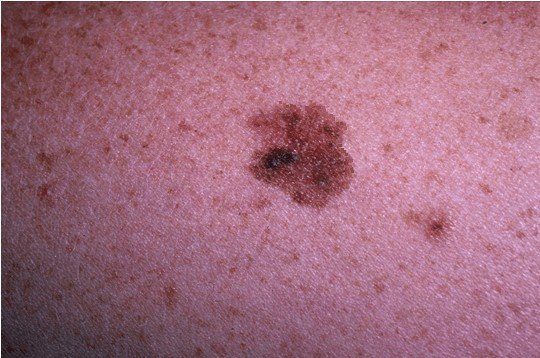

Contact us if you notice a change
Please make an appointment with us as soon as you can if you have a new mole, a mole that has changed in size, shape or colour, a mole that looks different from all your others, or any spot or sore that has not healed after about 4 weeks. You are not wasting anyone's time. We would far rather look at something harmless than miss something that matters.
A word about mole-checking apps. The British Association of Dermatologists advises against relying on smartphone apps to decide whether a mole is safe. If something has changed, please have it looked at properly.
Heat exhaustion and heatstroke
In hot countries your body can struggle to keep cool, especially if you are also sweating a lot, drinking alcohol or being active. Heat exhaustion is unpleasant but treatable. Heatstroke is a medical emergency.
| Heat exhaustion | Heatstroke — emergency | |
|---|---|---|
| What you might notice | Tiredness, dizziness, headache, feeling or being sick, cramps, heavy sweating with pale clammy skin, feeling very thirsty or irritable, a high temperature | A very high temperature, hot skin that is not sweating, fast breathing or a fast heartbeat, confusion and poor coordination, a seizure, loss of consciousness |
| What to do | Cool the person down and give them fluids. They should feel better within 30 minutes. | Call 999 (or 112 abroad) straight away. Keep cooling them while you wait for help. |
How to cool someone down
- Move them somewhere cool and out of the sun.
- Take off any unnecessary clothing, such as a jacket or socks.
- Give them plenty of water. A sports drink or a rehydration sachet mixed with water helps replace the salts lost in sweat.
- Cool their skin — spray or sponge them with cool water and fan them. Cold packs wrapped in a cloth, under the armpits or on the neck, work well.
Stay with them until they are better.
Call 999 (or 112) now if someone
- is still unwell after 30 minutes of resting somewhere cool, being cooled and drinking fluids
- has a very high temperature, or hot skin that is not sweating
- is confused, uncoordinated, restless or drowsy
- is breathing fast or short of breath, or has a fast heartbeat
- has a seizure or loses consciousness
Do not drive someone to hospital yourself if they are this unwell. In the UK, if you are not sure and it is not an emergency, contact NHS 111 (opens the NHS 111 website) or call 111.
Keeping hydrated
Aim for 6 to 8 drinks a day as a baseline, and more when it is hot or you are active. Do not wait until you feel thirsty — by then you are already behind. Water, milk, and tea or coffee all count. Alcohol does not; it makes dehydration worse.
Where tap water may not be safe to drink, use sealed bottled water — including for brushing your teeth — and avoid ice in drinks.
Read NHS advice about heat exhaustion and heatstroke (opens the NHS website)
Swimming, the sea and pools
Drowning is one of the most common causes of death for holidaymakers, and it can happen to strong swimmers. In 2024 there were 193 accidental drowning deaths in the UK alone; more than 8 in 10 of those who died were male, and men in their twenties were the highest risk group.
Open water is very different from a swimming pool. Currents and tides change quickly, cold water can take your breath away, and it is easy to be carried further out than you meant to go.
If you get into trouble in the water: float to live
The instinct is to panic and thrash about. Fight that instinct. Instead:
- Tilt your head back with your ears in the water.
- Relax and try to breathe normally.
- Move your hands and legs gently to help you stay afloat. It is fine if your legs sink — everyone floats a little differently.
- Once your breathing is under control, call for help or swim to safety.
If you see someone else in trouble: phone, float, throw. Call for help, shout at them to float on their back, and throw them anything that floats. Do not get in after them.
Staying safer around water
- Swim where there are lifeguards, and read the safety signs and flags.
- Swim parallel to the shore, so you can stand up or get out easily.
- Never swim after drinking alcohol.
- Keep children within arm's reach in and around water — in the pool with them, not watching from a sunbed. Accidents often happen in the moment an adult is distracted.
- Keep inflatable rings and lilos for shallow, sheltered water. In open water the wind can carry them out to sea very fast.
- Do not dive or jump from rocks, piers or harbour walls. You cannot see what is under the surface.
- Tell someone where you are going, and go with a friend.
Read RNLI water safety advice and watch the Float to Live technique (opens the RNLI website)
Alcohol, drugs and risk
Holidays are for enjoying yourself, and we are not here to lecture anyone. But it is worth knowing where the real danger lies. Most serious harm to British holidaymakers abroad does not come from exotic diseases. It comes from ordinary things done while very drunk: swimming, climbing, and balconies.
Alcohol changes your judgement before you notice it has. It also makes dehydration and heatstroke worse, and it makes cold water far more dangerous. With drugs there is the added problem that you have no idea what is actually in them.
A few things that genuinely help:
- Stay with people you trust and agree to look out for each other.
- Keep water going alongside alcohol, especially in the heat.
- Never swim, drive or ride a scooter or quad bike after drinking.
- Stay away from balcony ledges and railings, however good the idea seems at the time.
- Know where you are staying and how you are getting back.
If you are between 18 and 25 this matters most, because that age group has the highest number of serious accidents abroad. Please take care of each other.
Long journeys and blood clots
Sitting still for more than about 4 hours — by plane, coach, train or car — slightly increases the chance of a blood clot forming in a leg vein. This is called a deep vein thrombosis, or DVT. For most healthy people the risk is very small.
To lower it further: get up and walk about when you safely can, flex your ankles and calves regularly while seated, avoid crossing your legs for long periods, and keep drinking water. Compression stockings can help, and a pharmacist can fit you with the right size.
If you have had a clot before, are pregnant or recently gave birth, have had recent surgery, or have a condition that affects clotting, please contact us for advice before you book a long journey, as you may need different precautions.
Call 999 if, during or after a long journey, you have
- sudden breathlessness
- chest pain that is worse when you breathe in
- coughing up blood
- a feeling that you are about to faint
Get medical help the same day if one calf or leg becomes painful, swollen, warm or discoloured.
Getting medical care while you are away
Travel insurance
Buy it when you book, not the night before you fly. Declare any health conditions and any medicines you take — if you do not, a claim may be refused. Check it covers repatriation (being brought home) and any activities you plan, such as diving or skiing.
UK Global Health Insurance Card (GHIC)
Free, lasts up to 5 years, and lets you get state healthcare in the EEA and some other countries on the same terms as a local resident. Everyone travelling needs their own, including children. Apply only through the NHS website — other sites may charge you for something that is free.
A GHIC is not insurance
It will not cover private treatment, mountain rescue, a cancelled trip, or the cost of flying you home. You need both.
If you already have an old European Health Insurance Card (EHIC), you can keep using it until it expires, then apply for a GHIC.
Apply for a free UK Global Health Insurance Card (opens the NHS website)
If you come home unwell
Most holiday tummy upsets settle by themselves within a few days. Drink plenty of fluids and use rehydration sachets from a pharmacy. But some travel illnesses appear days, weeks or even months after you get back.
Whenever you contact any health service after travelling, say where you have been and when. It changes what we look for.
Contact us or NHS 111 the same day if, after travelling, you have
- a fever, chills or flu-like symptoms — particularly after a malaria area, and at any point up to a year afterwards
- diarrhoea lasting more than a few days, or blood in your poo
- signs of dehydration, such as passing very little urine, dizziness or extreme tiredness
- an animal bite, scratch or lick on broken skin while you were away — this needs assessing for rabies, even weeks later
- yellowing of the skin or the whites of the eyes
- a new rash you cannot explain, or a skin problem that is not healing
If you were unwell abroad and were given medicine or treatment there, please let us know when you get back so it can be added to your record.
Common questions
Can Ashcroft Surgery give me my travel jabs?
No. We do not run a travel health service, so we cannot give travel vaccinations or write travel-related private prescriptions. Please contact a pharmacy or travel clinic that offers travel health.
If you are due a routine NHS vaccination anyway, such as a missed childhood vaccination, please contact us in the usual way.
Can you give me an extra prescription to cover my holiday?
Yes, within reason. Order your repeat prescription in good time and tell us the dates you are away, so we can make sure you have enough for the trip plus a few spare days.
We cannot issue very long supplies in advance, and we cannot prescribe medicines on the NHS that are only wanted "just in case" while abroad.
Can you write a letter confirming I am fit to fly, or listing my medicines?
Letters and forms that are not part of NHS work are chargeable and are not usually urgent, so please allow plenty of time. Contact reception first — do not book a clinical appointment for this. They will explain the fee and how to arrange it.
Please note that a "fitness to fly" assessment is a judgement about your health at that moment, and a clinician may not be able to give the answer you were hoping for.
How long before travel should I book my vaccinations?
Aim for 6 to 8 weeks, and earlier for longer or more complicated trips. Some vaccines need several doses over weeks, and some do not become fully effective until days after the last dose. If your trip is sooner than that, it is still worth getting advice — partial protection is better than none.
Do I need to keep taking my malaria tablets after I get home?
Usually yes. Most malaria prevention tablets have to be continued for a set period after you leave the risk area — for some this is a week, for others four weeks. Follow the instructions you were given exactly, and finish the course. Stopping early leaves you unprotected at the very time symptoms could appear.
I have a long-term condition. Is there anything extra I should do?
Yes, a few things. Tell your travel insurer about every condition and medicine. Take a copy of your repeat prescription list. Carry medicines in hand luggage in their original packaging. Think about how to store anything that needs to stay cool. If your condition is unstable, or you are unsure whether travel is sensible, please speak to us well before you book.
I am pregnant. Can I still travel?
Many people travel safely during pregnancy, but some destinations, vaccines and malaria tablets are not suitable, and airlines have their own rules about how late in pregnancy you can fly. Please talk to your midwife or a clinician before you book, and check your insurance covers pregnancy.
How to contact us about any of this
For a mole you are worried about, advice about travelling with a health condition, or a prescription you need before you go:
- Call us on 01274 612 279
- Send us a request through PATCHS, our online consultation service (opens the PATCHS website)
Please do not use online forms for urgent medical problems. If you need help urgently, call us or use NHS 111. If it is an emergency, call 999.
Last reviewed: August 2026
Next review due: August 2027
Accessibility options
Change how this page looks. Your choices are saved on this device only.